
Collagen before and after results are real but modest: meta-analyses of randomized controlled trials show that hydrolyzed collagen supplements improve skin hydration and elasticity compared with placebo, usually measured after several weeks to a few months of daily use. Dramatic “before and after” photos online rarely reflect what studies measure, so it helps to know which changes to expect, when, and how to track them honestly.
This guide explains what the research actually shows, a realistic timeline of collagen results, how to take your own before and after measurements, and the most common reasons people see no change.
What “collagen before and after” really means
Collagen is the main structural protein in skin, tendons, cartilage and bone (see what collagen is and why it matters). The body’s own production slows down with age, which is why supplements are mostly marketed for skin, hair, nails and joints.
Most supplements contain hydrolysiertes Kollagen (collagen peptides): collagen broken down into small fragments that are easier to absorb. When studies talk about “before and after”, they compare measurable values – skin hydration, elasticity, wrinkle depth – at the start and end of the trial, against a placebo group.
What the research shows
Three independent systematic reviews point in the same direction for skin:
| Review | Studies included | Main finding |
|---|---|---|
| Nutrients, 2023 | 26 RCTs, 1,721 participants | Hydrolyzed collagen improved skin hydration and elasticity vs placebo |
| Hydrolyzed collagen meta-analysis, 2023 | Randomized trials on skin rejuvenation | Positive effects on hydration and elasticity |
| PubMed 38192916 | Studies published 2017–2023 | Improved skin moisture and elasticity vs placebo |
The authors also point out limitations: many trials are small, some are industry-funded, and results vary with the collagen source and the length of supplementation. The evidence is promising, not definitive – which is exactly how collagen before and after results should be read.
Collagen results timeline: what to expect and when
The timeline below is based on how the trials are designed and measured. Individual results vary.
| Period | What may change | What not to expect |
|---|---|---|
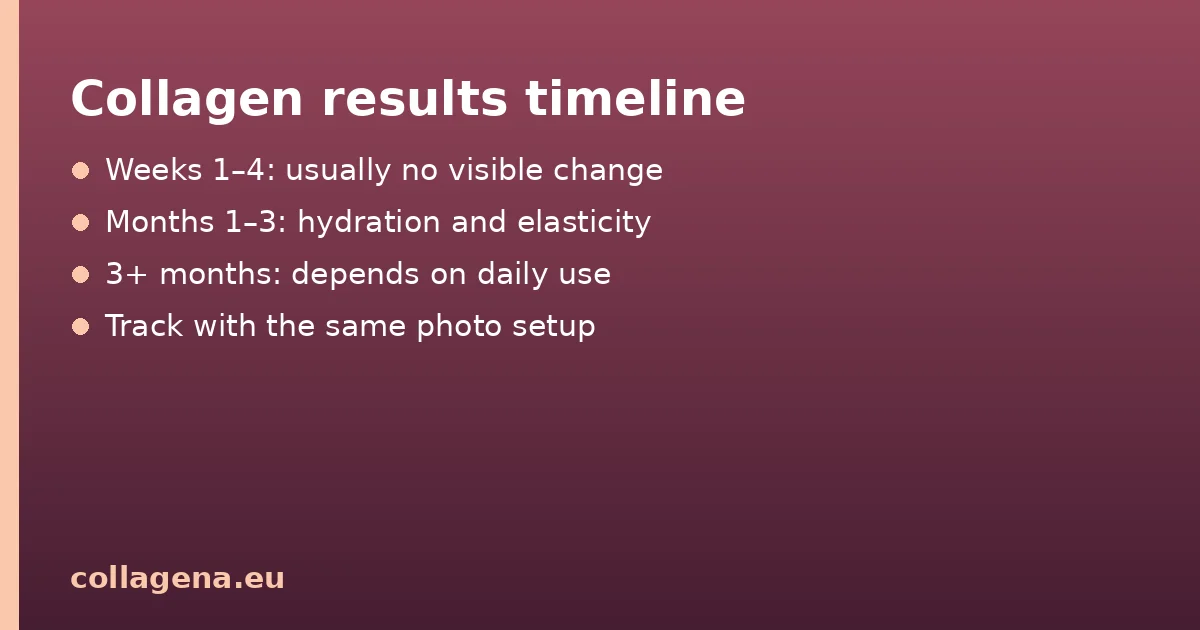
| First 2–4 weeks | Usually nothing visible; the habit is forming | Fewer wrinkles |
| Around 1–3 months | The period when most trials measure improvements in skin hydration and elasticity | Dramatic, photo-worthy changes |
| 3 months and longer | Effects depend on continued use; hair and nails grow slowly, so any change appears late | Results that last after stopping |
Joints are a different story: research on collagen for joint comfort is smaller and more mixed. Read more in collagen and joints.
How to track your own collagen before and after
Most online before and after photos are taken in different light, with different make-up or filters. If you want an honest picture of your results, follow these steps:
- Take a baseline photo on day one: same room, same daylight window, no make-up, same distance and angle.
- Write down a few simple notes: how dry your skin feels, how your nails break, any joint discomfort on a 1–10 scale.
- Keep everything else constant: do not start a new cream, retinoid or diet at the same time, or you will not know what worked.
- Take the same supplement daily as the label says – consistency matters more than the brand.
- Repeat the photo and notes at 4, 8 and 12 weeks.
- Compare side by side and decide honestly whether the change is worth the cost.
Why some people see no collagen results
| Problem | Likely cause | What to do |
|---|---|---|
| No change after 2 weeks | Too early – trials measure over weeks to months | Give it at least 8–12 weeks |
| Inconsistent use | Skipped days, irregular intake | Tie it to a daily routine, e.g. morning coffee |
| Low-quality product | Unclear dose or source, no third-party testing | Use our guide to choosing a quality collagen supplement |
| Skin damage outpaces any benefit | Sun exposure, smoking, poor sleep | Daily sunscreen and basic habits matter more than any supplement |
| Expecting photo-filter results | Marketing images | Track your own baseline as described above |
Collagen before and after for skin, hair, nails and joints
- Skin: the strongest evidence – hydration and elasticity. See collagen and skin.
- Hair: limited research; hair grows slowly, so judge only after several months. See collagen for hair.
- Nails: some people report fewer breaks; evidence is limited.
- Joints: smaller and mixed evidence; talk to a doctor if pain is persistent.
Not sure which type to take? Read collagen types 1, 2 and 3.
Marine vs bovine collagen: does the source change the results?
Collagen supplements are usually made from fish (marine collagen), cattle (bovine), pigs (porcine) or chicken. The Nutrients 2023 review noted that the effect on skin hydration depended partly on the collagen source, but the research is not strong enough to name one clear winner.
| Source | Main collagen types | Typical use | Who should avoid it |
|---|---|---|---|
| Marine (fish) | Mostly type I | Skin-focused products | People with fish allergy |
| Bovine | Types I and III | General skin, hair and nails products | People avoiding beef products |
| Chicken | Mostly type II | Joint-focused products | People with poultry or egg allergy |
In practice, consistency and product quality matter more than the source. Pick a source you tolerate and can take every day.
Support your own collagen while you take supplements
Supplements are only one part of the picture. Your body builds collagen from amino acids, and it needs vitamin C for that process. A few habits support your results and protect the collagen you already have:
- Daily sun protection. UV exposure is a major cause of collagen breakdown in the skin.
- Enough protein. Collagen is built from amino acids that come from your whole diet.
- Vitamin C from food. Fruit and vegetables such as peppers, citrus and berries.
- No smoking. Smoking is linked to premature skin ageing.
- Sleep and stress. Both affect how your skin looks and recovers.
Our guides to foods that support collagen production und how collagen levels change with age go deeper into these habits.
How to take collagen consistently
The trials behind collagen before and after results have one thing in common: participants took the supplement every day. In real life, consistency is where most people fail. These practical tips help:
- Link it to a habit you already have – your morning coffee, breakfast smoothie or evening tea. Collagen peptides dissolve easily in warm and cold drinks; read whether coffee affects collagen.
- Keep it visible. A container next to the kettle is taken more often than one in a cupboard.
- Use a simple tracker. A tick on a calendar is enough – it also tells you honestly how many days you actually took it.
- Do not change products every few weeks. Switching brands resets your comparison.
- Follow the label. Take the amount stated by the manufacturer and ask a pharmacist if you take other supplements or medicines.
Collagen before and after: what changes with age
Age changes how visible the results can be. In your twenties and early thirties your own collagen production is still relatively high, so the difference from a supplement is usually harder to notice. From middle age onwards, and especially after menopause, skin becomes drier and less elastic, which is also the group most often included in skin studies. That does not mean collagen works only after a certain age – just that expectations should match the starting point. See also should we start taking collagen after 25.
Is it worth it? A realistic cost check
Before you start, decide what result would make the supplement worth its monthly cost for you – for example, skin that feels less dry or nails that break less. Then use the 12-week tracking method above. If your own collagen before and after comparison shows no meaningful change, it is reasonable to stop and spend the money on sunscreen, a good moisturiser or a better diet instead.
Summary in one paragraph
Hydrolyzed collagen has the best evidence for skin hydration and elasticity, measured after several weeks to a few months of daily use. Expect gradual, modest changes rather than a new face in a photo. Track your own baseline with the same photo setup, keep the rest of your routine constant, protect your skin from the sun, and judge the result honestly after about three months. That is the most reliable test you can do at home.
Frequently asked questions
How long does collagen take to work?
Most studies measure skin improvements after several weeks to a few months of daily use. Little or no change in the first two to four weeks is normal.
Are collagen before and after photos real?
Some are, but many are taken in different light or with filters. Studies measure hydration and elasticity with instruments, and the changes are modest rather than dramatic.
Do collagen results last after you stop?
There is little evidence that the effects last after stopping. The trials measure results during supplementation.
Is hydrolyzed collagen better than regular collagen?
Most of the research on skin uses hydrolyzed collagen (collagen peptides), so that is the form with the most evidence behind it.
Who should not take collagen supplements?
People with allergies to the source (fish, eggs, bovine products), pregnant or breastfeeding women, and anyone with a chronic condition should ask a doctor or pharmacist first.
This article is for information only and does not replace advice from a doctor or pharmacist.

0 Kommentare